- Acupuncture Solutions3900 Pebblecreek Ct #101
Plano, TX 75023972-612-4900 - 6501 Wesley St #A-1
Greenville, TX 75402903-213-3679
Acupuncture
Headache Newsletter
Headaches – How Acupuncture Helps
If you suffer from headaches, you are not alone. Over 50 Million of us experience some form of a severe headache at some point in our lives. Whether you experience minor head pain or severe migraines, headaches can take valuable time out of your day and your life, and leave you searching for relief.

Do You Need Acupuncture For Your Allergies?
 7 Signs That You Need Acupuncture This Spring
By Sara Calabro
Spring is here! Yes! Except for the fact that many people don’t feel so hot this time of year.
The flu is—knock on wood—mostly behind us. Allergies have not quite exploded yet. So, why do so many of us feel off in the early days of spring?
You can kindly thank your Liver!
In acupuncture theory, humans are viewed as microcosms of the natural world that surrounds them. Seasons—particularly the transitional periods, when we move from one season to the next—factor significantly into how we feel.
Each season is linked with an organ system in the body, and spring’s system is Liver. This means that the Liver, as it adjusts to taking over the seasonal reigns, is especially vulnerable.
When the Liver is vulnerable, the functions throughout the body for which the Liver is responsible have a tendency to get out of whack.
Eventually, spring can become a time when the Liver and its associated functions thrive. However, during this transitional period, when the Liver is still finding its footing, certain symptoms commonly show up. Acupuncture improves these symptoms by restoring balance to the Liver system.
You Need Acupuncture If…
Here are seven signs that your Liver may need some acupuncture love:
You feel extra tense
In acupuncture, Liver is the system that’s responsible for smooth flow throughout the body. When the Liver is not functioning optimally, things like emotional stress, rigid posture, shallow breathing, and jaw clenching may become exacerbated.
You have headaches and other aches and pains
When things aren’t flowing smoothly, we start to experience what acupuncturists think of as stagnation-type symptoms. These include pain, and specifically pain that feels like pressure, tightness or restriction. Tension headaches and menstrual cramps are commonly worse this time of year.
Your muscles are really stiff
The Liver and its associated system, Gallbladder, nourish the body’s connective tissue, tendons and ligaments. You may notice increased stiffness, tension or tightness in your muscles and joints in the coming weeks.
You feel irritable and frustrated
Are you feeling more annoyed than charmed by the springtime sound of chirping birds? The emotional symptoms associated with Liver imbalances mimic the physical stagnation that happens. You may notice yourself feeling extra irritable or frustrated, perhaps more easily annoyed. There’s an emotional stuckness that can take hold in spring.
Your fuse is shorter than usual
All organ systems in acupuncture have an associated emotion. Liver’s emotion is anger. A healthy dose of anger helps complete a balanced emotional profile. However, when the Liver isn’t appropriately keeping things in check, there is a tendency for anger to rise up. Along with feeling irritable, you may have a harder time than usual controlling your anger.
Your digestion is messed up
Healthy digestion is heavily dependent on consistent and smooth movement throughout the whole body. When the Liver fails to maintain flow, digestive disturbances can easily occur. There’s also the whole brain-gut connection. When emotional stress is higher than usual, digestive function naturally declines.
Your eyes are bothering you
Just as all organ systems have an associated emotion, they also have an associated sense. Sight goes with the Liver system, so any issues related to eye health are usually attributed, at least in part, to a Liver imbalance. This can include poor vision as well as eye pain and fatigue, and dry eyes. This simple exercise can help.
The Springtime Acupressure Point
If you only remember one acupuncture point all spring, it should be Liver 3.

Located on the foot, between the first and second toes(see picture at right), Liver 3 is the source point on the Liver channel.
Source points behave sort of like central stations on subway lines. They are hubs where internal and external energies gather and transform. They are single, high-concentration points that grant access to the larger system.
Any time of year, Liver 3 is a go-to point for stagnation throughout the body. Because of the spring–Liver connection, the point is doubly useful for addressing springtime stagnation-type symptoms.
Applying acupressure to Liver 3 will help get things moving like no other point. Poke around the point area until you discover a tender spot. Liver 3, if pressed firmly enough, is sensitive on most people.
Once you have the point, apply firm pressure. This should feel a little achy. The more the better on this point, so feel free to do this acupressure exercise anytime your bare feet are available. Liver 3 can be pressed on one or both sides.

If you like gadgets, this acupressure device can be used for Liver 3. It was designed for Large Intestine 4, a point on the hand, but it also fits nicely and works just as well on Liver 3 (see picture at left).
If in the coming weeks you experience some tell-tale signs of a Liver imbalance, don’t get down on yourself—they’re completely normal during the seasonal transition. A little acupuncture will help realign your system so that you can enjoy the wonders of spring.
Photos by Sara Calabro
Women’s Health Issues
 Here is a good summary of women’s health issues that was compiled by acufinder.com.
Everyone wants to be healthy in order to enjoy a sense of well-being and have the best quality of life possible. Oriental medicine has always addressed the special needs of women throughout their lives. Women are more susceptible than men to certain health conditions, which can make it more challenging to achieve optimal health. Fortunately, many health issues women face respond extremely well to acupuncture treatments.
Several conditions that impact women more frequently than men include:
Depression:
The National Alliance on Mental Illness (NAMI) states that women are twice as likely to experience depression as men and one in eight will contend with major depression during their lifetime. According to the World Health Organization (WHO), depression is the most commonly reported mental health problem among women.
Chronic Fatigue Syndrome (CFS):
Four times as many women as men develop chronic fatigue syndrome. CFS sufferers may feel tired for more than six months, experience reduced memory, insomnia or a wide range of other symptoms, including but not limited to, headaches, flu-like symptoms and chronic pain. Oriental medicine can help relieve many of your symptoms because it is exceptional for relieving aches and pains, helping to avoid getting sick as often, recovering more quickly, and improving vitality and stamina.
Irritable Bowel Syndrome (IBS):
Women are 2-6 times more likely to develop IBS. Acupuncture points can help relieve IBS symptoms, according to researchers from the University of York in the U.K., who found that integrating acupuncture into a treatment plan led to less severe symptoms.
Autoimmune Diseases:
According to the American Autoimmune Related Diseases Association (AARDA), about 75 percent of autoimmune diseases occur in women. As a group, these diseases make up the fourth-largest cause of health related disability among American women.
Some specific autoimmune diseases that affect women disproportionately more than men include:
- Multiple Sclerosis (MS): Nearly half a million Americans have multiple sclerosis, and of that group two-thirds are women. According to the American Academy of Neurology, women with MS are nearly 1.5 times more likely to carry the gene associated with the disease, and are more likely to transfer the gene to female offspring.
- Lupus: Ninety percent of all lupus patients are female. Lupus has no known cause, though it is believed it may be hereditary, and may also be triggered by stress, environmental toxins, sunlight, exposure to fluorescent light, and some medications.
- Celiac Disease: An autoimmune disorder that affects the digestive system due to an adverse reaction to gluten, 60 to 70 percent of celiac disease patients are women.
Read More about acupuncture and Oriental Medicine for women’s health!
Acupuncture 101: How do Needles Work?
Ever wonder why inserting a tiny needle between your thumb and index finger can help your headache? Or putting needles in your ear can help your indigestion?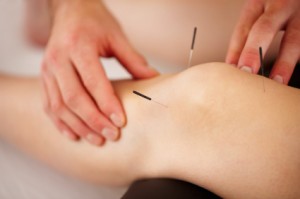
Many people wonder how acupuncture works. Scientists and doctors are especially prone to skepticism about acupuncture. To people trained in western medicine, it doesn’t make sense. Traditional Chinese Medicine (TCM) does not follow their familiar logic.
Yet there is growing body of evidence that TCM, and acupuncture specifically, is an effective treatment for many injuries and diseases–often with few side effects. For these reasons more and more hospitals, clinics and doctors worldwide are recommending it for their patients.
Research and clinical trials will continue but for the people who have found relief from their symptoms and conditions using these ancient techniques, such research is unnecessary. They know acupuncture works.
But why?
Western Perspective
There are several theories to explain acupuncture. The most widely accepted is that the stimulation of acupuncture points with needles sends electrical signals to the brain to release endorphins, the chemicals that make us feel good. Another theory states that acupuncture needles stimulate blood flow and tissue repair at the needle sites. Still another states that needles send nerve signals to the brain that regulate the perception of pain and reboot the autonomic nervous system to a “rest and relax” state. Some scientists now believe that acupuncture uses several of these mechanisms at once.
While each theory explains some of the clinical trial results, none of them explain the wide range of conditions that benefit from acupuncture.
Eastern Perspective
There is no western analogy to Traditional Chinese Medicine concepts.
TCM believes Qi, or life energy, flows through the body. The Qi flows in channels called meridians and the meridians connect the organs together. To remain healthy you need the free flow of Qi through the meridians, much like rivers flow in their riverbeds.
Sometimes the flow of Qi becomes imbalanced. Like a river, it can be blocked, excessive or  deficient. To rebalance the Qi, you stimulate acupuncture points to free the flow of Qi and return it to a more balanced state. One way to stimulate the points is with acupuncture needles.
Since the meridians connect the organs of the body, sometimes you can stimulate an acupuncture point that seems completely unrelated to the organ you want to balance. If you unblock a river at one point the flow of the entire river, upstream and downstream, returns to normal. Acupuncture works much the same way.
References: http://online.wsj.com/article/SB10001424052748704841304575137872667749264.html