- Acupuncture Solutions3900 Pebblecreek Ct #101
Plano, TX 75023972-612-4900 - 6501 Wesley St #A-1
Greenville, TX 75402903-213-3679
Acupuncture
Research Update: Acupuncture & Lung Cancer
Acupuncture – Another Tool in the fight against Cancer
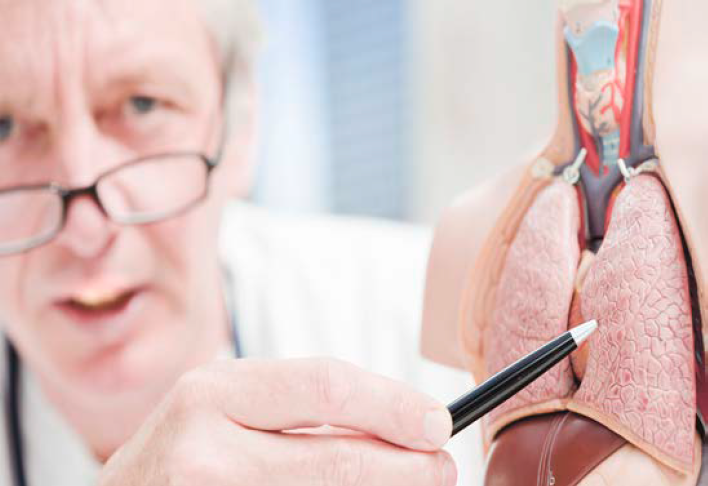
In a study conducted and published by the National Center for Biotechnology Information and in conjunction with the National Institute for Health, patients suffering from lung cancer showed improvements in several areas after being treated with acupuncture.
Pain was decreased, appetite increased, nausea and nervousness decreased, and overall, the patients well-being was improved. The study showed that 61 percent of patients reported less pain and 33 percent of the patients reported an increase in their total well-being. Those participants who received more acupuncture treatments reported that their well-being was positively affected and it was determined that a minimum of six acupuncture treatments were required for a 70 percent chance of clinical improvements regarding the overall well-being.
Lung cancer is the leading form of cancer in the United States, according to the American Lung Association. As with most forms of cancer, lung cancer is non-discriminatory in nature and can affect anybody, at any age. However, it is more prevalent in smokers, those exposed to secondhand smoke and people who have asbestos poisoning. Most lung cancer patients have multiple symptoms, including pain, fatigue, depression, difficulty breathing and anxiety. Acupuncture and Traditional Chinese Medicine can be very useful tools in treating the symptoms of lung cancer, as well as decreasing the side effects of radiation and chemotherapy.
Every single person on the planet has cancer cells in their body. Those cancer cells only proliferate or duplicate when there is the perfect storm of conditions in the body, such as:
- decreased immunity
- prolonged stress and anxiety
- improper dietary habits
When the body is balanced, the immune system attacks and destroys renegade cancer cells before they can become malignant. But an unbalanced immune system, will often fail to defend the body from the cancer cells.
TCM and specifically, acupuncture, has shown great promise in helping lung cancer patients deal with the many symptoms they encounter. One of the most important ways regular acupuncture treatments can help lung cancer patients, is by boosting the immune system. The acupuncture needles are homeopathic in nature, but when they puncture the skin, the needles are perceived as an enemy by the body. This causes the body to send an immune-mediated response to the area, which in effect, retrains the body’s immune system to attack the intruders. The needles can be placed near or around the area of the cancerous tumor, which allows the defensive action of the immune system to be channeled to the cancer site itself.
Acupuncture can also be very effective at treating the other common symptoms of lung cancer. Symptoms like fatigue, depression and anxiety, can be managed with multiple acupuncture treatments that balance hormones in the body. When these are decreased, the immune system and the overall body will become stronger.
As with any form of cancer, having the proper diagnosis and treatments are essential. But adding complementary therapies, such as acupuncture, can increase the probability of success at defeating the disease.
The Many Dimensions of the Heart
 The Heart – the Universal Energy of Summer
The heart is an energetic system we often treat in Traditional Chinese Medicine. According to Chinese Medicine theory, there are many systems of energy within the body. Each of these systems corresponds to certain physiological and psychological functions. So when we talk about the heart, the lungs, the liver. However, when we are speaking about Chinese Medicine organs, we are not talking about the physical organ sitting in your body, but rather the energetic manifestations of a particular system in the physical, mental, emotional and spiritual realms.
The heart is an incredibly important energy system in Chinese medicine, often said to be the emperor of all the other energy systems. It is related to the fire element, which is the universal energy of summer.
On a physical level, the heart is responsible for pumping blood through our body, just as it is in allopathic medicine. It controls the health and vitality of the blood vessels, and also controls sweating, the tongue and speech. But perhaps the most important role of the heart in Chinese medicine is that it houses the Shen, or spirit.
The Shen in Chinese Medicine is referred to as one of the three treasures of the body, and it encompasses consciousness, the emotions, mental acuity and thought, as well as the ability to process incoming sensory information. Each organ system in Chinese medicine is related to one aspect of the spirit (such as intellect, willpower or instinct) – but the Shen is the most important, as it governs all the other aspects. Prolonged emotional upheaval, mental illness, personality disorders, emotional imbalance, processing disorders and sensory disorders all are manifestations of a disturbed, ungrounded or weakened Shen.
The emotion associated with the heart is joy. This means that joy nourishes the heart, but excessive joy (ie, mania) is a symptom of an imbalance in this system.
The heart is all about the very act of being alive – from the physical heart beating in our chest, to the flow of blood through our veins, to our mental ability to stay present and focused, and our emotional selves being whole and complete. It is the energy of summertime – abundant, hot and lively.
Nourish the Heart through Food
The color associated with the heart is red, and the heart is nourished through red foods, such as cherries, strawberries and kidney beans. Being closely associated with the blood, it is also nourished by blood-tonifying foods such as organ meats, lean red meat and dark leafy greens. The heart is closely tied to appreciation of beauty and aesthetics, so the heart system is also nourished by food for which care has been given to present artfully, with beauty and grace, and a wide array of colors on one plate. Again, the heart is associated with summertime, so think of the abundance of fruits and vegetables available that time of year, and try to reflect that energy in your food choices.
Nourish the Heart through your habits
The heart is nourished through activities that bring you cheer and joy. Nourishing the heart is about celebrating that which you love in the world – people, places and ideals. As the heart governs our relationships with other human beings, it is nurtured by feeling connected to those that we love. Reach out to friends and family, forge new bridges and strengthen lasting bonds. The heart is also nourished through beauty – take time to appreciate the beauty of your natural surroundings, as well as music, poetry, art and dance. Lastly, the heart is nurtured by ritual. This can be a long-standing religious or cultural ritual, or one that you create for yourself. Some examples of heart-healthy rituals include writing down five things you are grateful for each night, incorporating some sort of gentle exercise during each morning, practicing 10 minutes of sitting meditation each day, or grab a coloring book and start coloring!
Foods to Improve Heart Health
Wonder how you can help your heart stay in balance? Well, what you put into your body goes a long way in determining how balanced you are. Check out some of these foods you should consume in order to promote good heart health.
Red foods have been shown to help the heart biochemically; foods such as hawthorn berries, strawberries, cherries, raspberries, tomatoes, watermelon, peppers and goji berries keep your heart happy with lycopene and anthocyanin, antioxidants and beneficial vitamins.
Other helpful foods include garlic, cayenne, cilantro, basil, magnesium (found in leafy greens, nuts and soy) and green tea. Also try ginseng, jujube dates, reishi mushrooms, dong quai, seaweed and schizandra berries.
Orange vegetables like carrots have carotenoids and lutein, powerful phytonutrients. And oranges, the fruit, can help decrease your risk of heart disease.
Liver Tune-Up
In Traditional Chinese Medicine, each season is ruled by a particular organ system and spring is connected to the liver. What does this mean? Well, you probably notice changes in the way you feel, both physically and mentally, as the seasons change. I know I tend to feel a bit more contemplative and introspective during the winter months. Once spring hits, I’m ready to recharge and get things done. The liver energy is strong and assertive, the type of energy you need to create plans and then propel them into motion. However, if your liver is a little out of balance, you might notice you are more irritable or on edge than usual. Here are a few signs that your liver is in need of an acupuncture tune-up:
1. You’ve noticed an increase in headaches lately, and these headaches seem to feel worse when you aren’t active. Generally these headaches tend to manifest at the vertex of your head.
2. You might begin to feel constipated or bloated. Your bowel movements might become irregular, alternating between constipation and loose stools. Hard, difficult stools that appear pebbly are also a sign of liver imbalance.
3. Your friends or coworkers are scared of you, because you are cranky, cranky, cranky. When liver energy is out of balance you might feel agitated, irritated and generally out of sorts. Sometimes irritation can expand into outright anger more easily than it would if this energy was flowing smoothly.
4. Ladies, you may notice your PMS symptoms have been worse lately. Bloating, breast tenderness, sensitivity…you can blame all of the above on your liver. If your periods are more painful or clotted, this is also due to a stagnation of liver energy.
5. Your eyes are red, itchy or irritated.
6. Your shoulders, neck or jaw are uncomfortably tight. If the liver energy is out of balance, it can flow upward. This causes everything in your body to rise up: you might grind or clench your teeth, your shoulders will levitate up around your ears, and you might experience symptoms of TMJ.
7. Your allergies are in full force, complete with itchy, red, watery eyes.
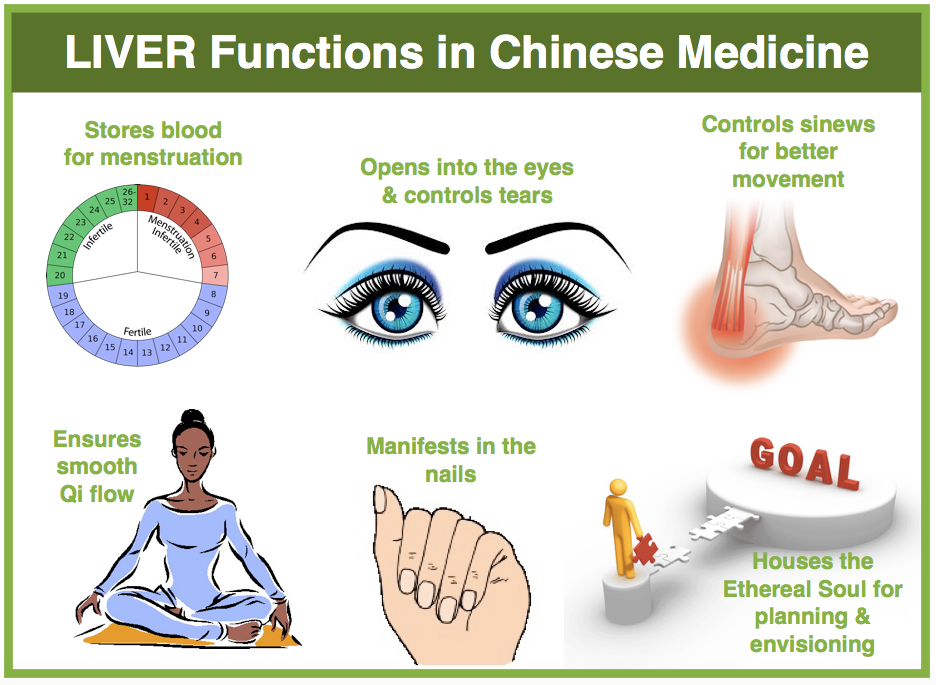
If you are suffering from any of these issues, your body is crying out for help! Here are a few dietary tips to help:
- Eat simply and lightly, pay particular attention to posture and tension during and after eating.
- Eat a diet that is rich in vegetables and moderate in fruits which will help resolve stagnation.
- Bitter foods will help resolve stagnation affecting the Liver and Stomach.
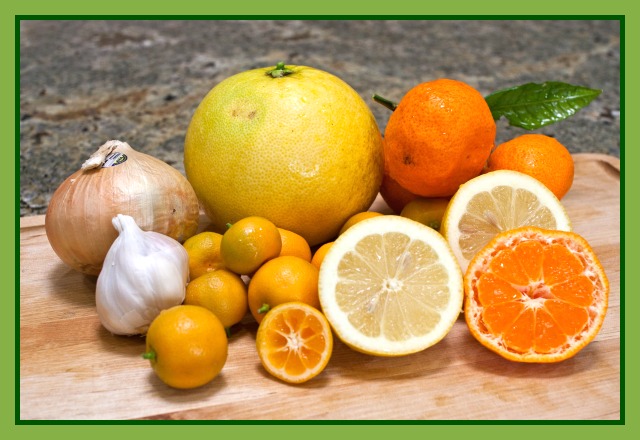
- Moderate amounts of the pungent flavor will help to stimulate the system out of stagnation. Onions and citrus peel are good for this purpose.
A trip to your Acupuncturist is also in order!
Our Multi-dimentional Kidneys
Acupuncturists understand the body as a complex system of energy systems, meridians and organs. However, when an acupuncturist talks about an organ, like the spleen, heart or kidneys, they are not referring to the physical organ that sits inside your body, but rather the energetic side of these organs. The energetic system is much bigger than just the physical organ, and governs certain functions in the body on many levels.
The kidney system is one of the most important of these energetic organ systems.
In Traditional Chinese Medicine, the kidneys represent the deepest, most fundamental levels of energy in the human body. They are said to be the root of yin and yang in the body – two fundamental forces at play in our physiology. The kidneys also store a substance called “essence” that is our genetic code, our life force and our reproductive ability.
The kidneys in Chinese Medicine are related to the water element, which is the elemental energy of winter. Whereas many energy systems are all about movement, the kidneys are about rest, relaxation, rejuvenation – they are the energy of holding, of turning inward, of protecting that which is most important. Think of still reflecting pools, or a quiet winter night. These are kidney energy. The kidneys are often referred to in Chinese Medicine as our “root” – they are tasked with caring for the most precious parts of us that make us who we are.
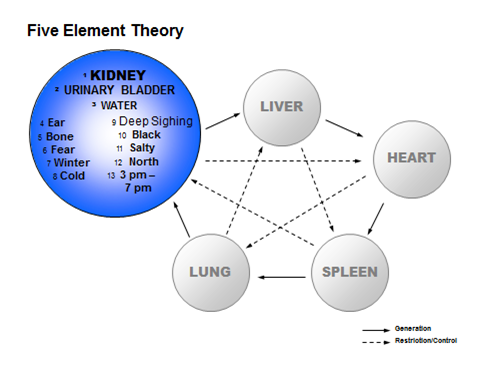
On a physical level, the kidneys govern the water passageways within the body (appropriate being the water element!) as well as controlling growth and reproduction. In a five element understanding of Chinese Medicine, the kidneys are at the end of the life cycle, before rebirth occurs again (such as winter making way for spring.) This means the kidneys in particular have a vital role to play in end of life transitions.
The spirit aspect of the kidneys is called Zhi, or willpower:
Again, the kidneys are our root, our fundamental and core energy. When that system is weakened, a person may not feel drive, motivation or have the ability to push themselves. Their understanding of who they are and what they can do has been diminished.
The emotion associated with the kidneys is fear. When the kidneys are weak, a person may be startled or frightened easily, or may experience fear in disproportionate ways. Likewise, shock, trauma and fearful situations weaken the kidney energy, which is why many of the common symptoms of PTSD have a kidney imbalance at their root. The person’s core has been shaken.
The kidney energy, being the deepest level of energy in the body, takes time to replenish and strengthen, which means patience is key. Also, the kidney energy naturally declines over the life cycle, which is the normal aging process. So as we age, protecting the kidneys becomes all the more important!
Nourish the Kidneys through Food:
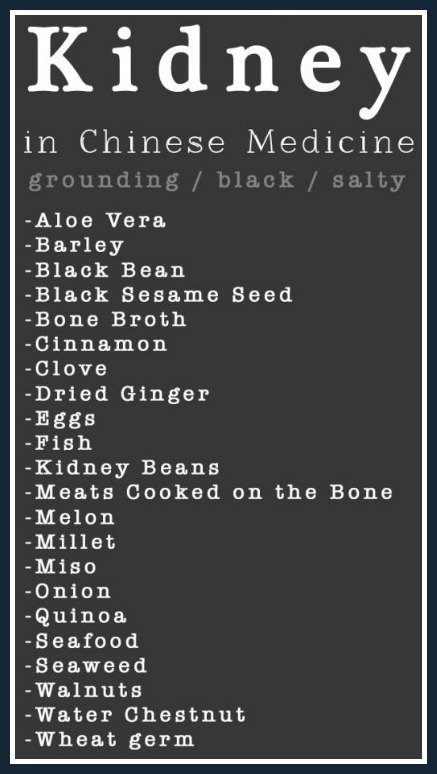
Being associated with the water element, the kidneys are nourished by foods that come from the water – fish, seaweeds and shellfish are nourishing to this system. The kidneys are associated with the salty taste, so naturally salty foods such as miso or millet also are good choices. Avoid foods that are damaging to your root energy, such as sugar, caffeine, alcohol, greasy foods and highly-processed foods.
Nourish the Kidneys through your habits
The kidneys are damaged by overwork, too much responsibility, lack of sleep and a frenetic schedule. In other words, most of us living in modern society are taxing our kidneys! This means it is all the more important to carve out time and space to take part in kidney-nourishing habits.
As we mentioned, the kidneys are nourished through rest and rejuvenation. Pay attention to your sleep, and be sure you are getting the hours that you need! Take a nap in the day if you need it. Engage in gentle, relaxing forms of exercise, like yoga or tai chi. Try meditation or guided visualizations to calm and center yourself. Find a schedule that works – one that really works – for you.
Bring the water element into your life and your home by getting a small decorative fountain, using essential oils, taking baths or spending time near rivers or oceans or other bodies of water. The kidneys, being the source of our reproductive strength, are also weakened by excessive sexual activity. So go for quality over quantity.
The kidneys represent what makes you, you. So take the time to give them the support they need!
Heart A’fire: The Fire Element
The organs in Chinese medicine are more than just a physical representation. The organs include not only their physiological function, but also their mental, emotional, spiritual and elemental qualities that align with nature and the seasons. Let’s explore the heart.
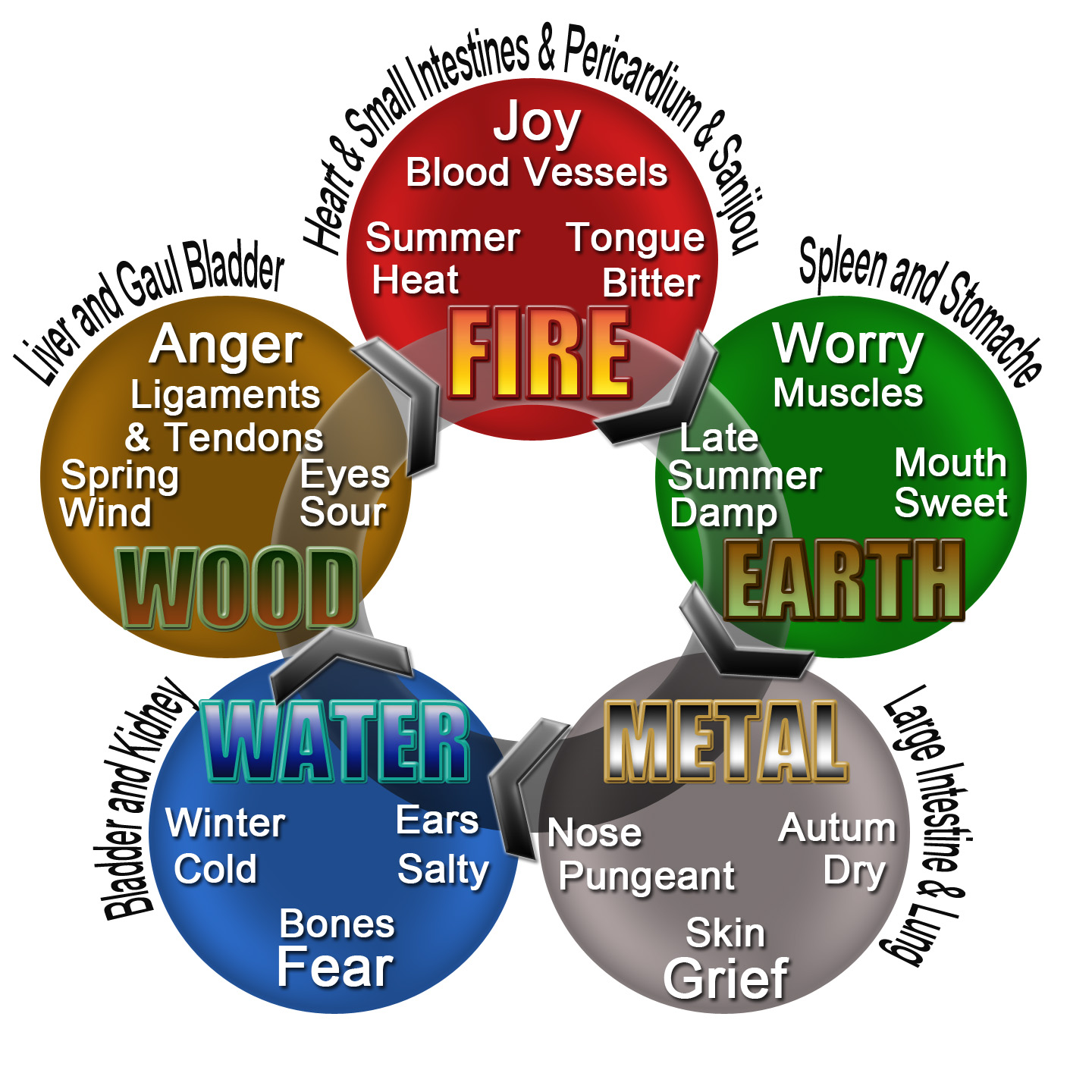
The heart season is summer, and heart is considered the most yang: hot, bountiful and abundant. Yang is what is bright, moving, outward, hot and loud. Yin is what is more inward, still, dark and cooler. The color of the heart is associated with red, the climate is heat, the flavor is bitter and it’s paired organ is the small intestine (many urinary issues are due to “heart fire” heat descending). The sense aligned with heart is the tongue, and the vessels associated with heart are the tissues. The heart sound is laughing, and the emotion is joy. The heart houses what is known as the shen, which is the mind and spirit. You can see a person’s shen in a healthy complexion and radiant eyes that are clear and bright. The heart is in charge of circulation and keeps the tissues well nourished. It is also associated with mental clarity, memory and strength. The motion of this fire element is upward, like a flame. Many who have this element dominant in their personality have red hair that is curly or spikes upward. The heart is also connected to speech. An imbalance in heart energy can result in stuttering, speaking excitedly or talking excessively.
A healthy heart energy exudes a sense of joy, fun, enthusiasm, action, warmth, and charisma. These people are the “life of the party,” and love to have a good time with friends and to be the center of attention. When the heart is balanced, sleep is sound and one is well rested.
On the other hand, when there is an overabundance of fire this can result in restlessness, anxiety, sweating, excitability and symptoms such as palpitations, irregular heartbeat, insomnia, disturbing dreams, mouth sores, thirst, red face, constipation and dryness. This person might shrink if not in the limelight and would constantly seek attention and need activities that produce a lot of excitement. He or she might have trouble being introspective and could not be alone. “Overjoy” is an imbalance of heart energy and is likened to manic behavior. A dominant fire may also be extremely sensitive to heat. A lack of the fire element, on the other hand, can result in a lusterless complexion, low energy, inertia, depression, feeling cold, low libido and the personality may lack warmth. This type may seem cold, frigid, lack drive and may be prone to addictions.
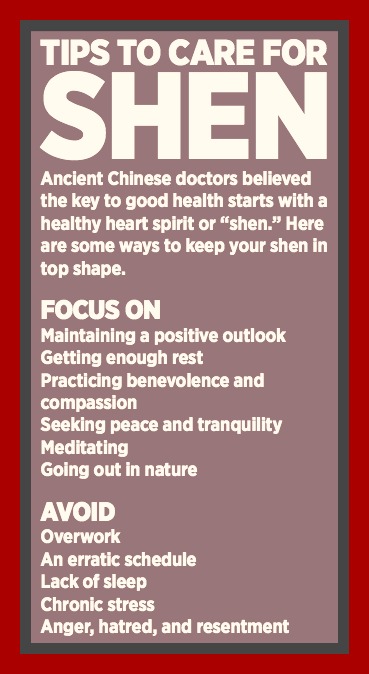
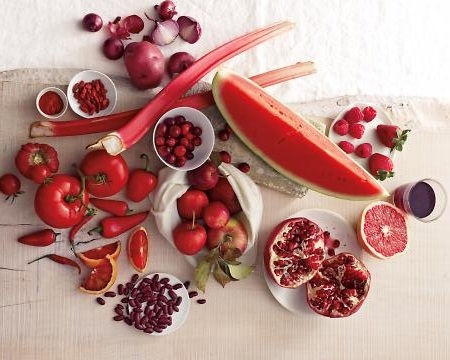
How to help your heart stay in balance? Red foods have been shown to help the heart biochemically; foods such as hawthorn berries, strawberries, cherries, raspberries, tomatoes, watermelon, peppers and goji berries keep your heart happy with lycopene and anthocyanin, antioxidants and beneficial vitamins. Other helpful foods include garlic, cayenne, cilantro, basil, magnesium (found in leafy greens, nuts and soy) and green tea. Also try ginseng, jujube dates, reishi mushrooms, dong quai, seaweed and schizandra berries. Calming activities such as walking, tai qi, or qi gong help calm the shen.
It is best not to self-diagnose, so see your healthcare provider to see if those foods are right for you. You don’t want to assume you have too much of one element and end up eating the wrong foods. A Chinese medical specialist can give you a proper diagnosis as far as the Five Element theory goes to see which element is dominant in you, and they can treat your condition with acupuncture, herbs and offer advice for beneficial changes in diet and lifestyle.